At 55 and 60 years old, Asian elephants Debbie and Ronnie continue to stay active together in Sycamore Habitat, from exploring the “Upper 40” portion of their habitat to sharing early-morning interactions that reflect their longtime companionship. The two have recently ventured into forested areas during warmer weather and made many trips to Minnie’s Pond.
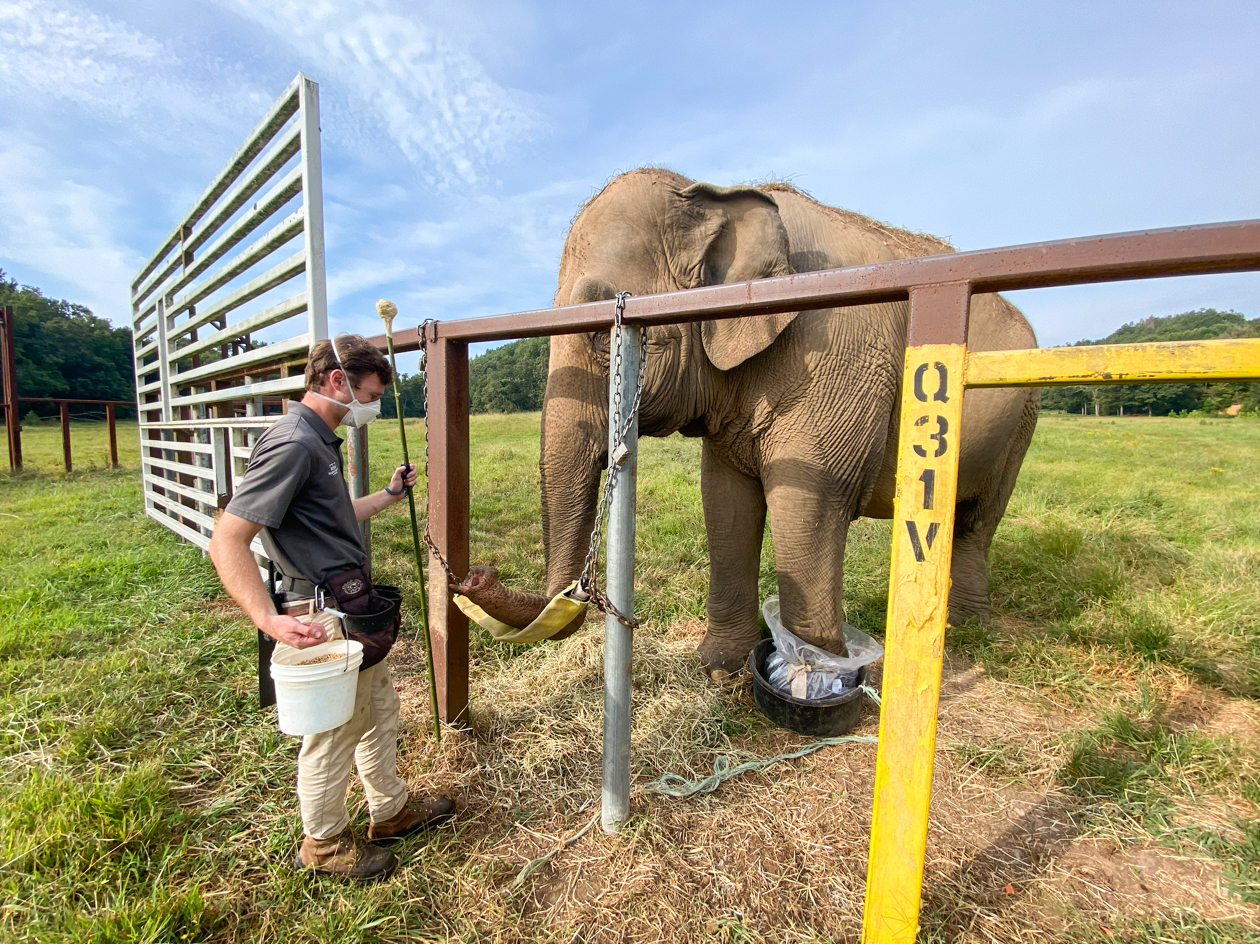
Top photo: Debbie using trunk rest adaptation during foot care
Caregivers have also captured some especially meaningful moments between Debbie and Ronnie, with the two reaching out and touching one another with their trunks, a testament to the social relationships elephants can form.
For Debbie, these everyday activities—where she goes, how she moves, when she rests, and how she interacts with Ronnie and her Caregivers—also provide important information to The Sanctuary’s Elephant Care and Veterinary Teams as they support her through the changes that can accompany aging.
Understanding Musculoskeletal Health in Aging Elephants
An elephant’s immense size places significant demands on the feet, joints, and limbs throughout their lifetime. As elephants age, cartilage within the joints can deteriorate and inflammation can increase, potentially resulting in stiffness, discomfort, and reduced mobility.
The Sanctuary’s Veterinary and Elephant Care Teams closely monitor aging elephants for changes in gait, stance, sleep, appetite, activity, and social behavior. Because every elephant has a different history and physical baseline, recognizing even subtle changes can help the teams determine when care may need to evolve.
Recently, the teams have been closely monitoring increased discomfort in Debbie’s left front limb while continuing treatments and evaluating her mobility and overall comfort.
There is no single approach to supporting an aging elephant experiencing musculoskeletal changes. Care may include pain-management medications and supplements, physical therapy, exercise, opportunities for swimming and wallowing, habitat modifications, specialized flooring and resting areas, and adaptations to how routine medical care is performed.
A New Tool Designed for Debbie
At Sycamore Barn, the team recently began designing a portable trunk rest for Debbie to use during treatments and foot care.
Debbie experiences trunk paresis, or weakness, which can make holding her trunk up for extended periods difficult without something available to rest it on. After experimenting with several designs, the team created a portable version that could be positioned where Debbie needed it during care.
Its first big test came during a recent 20-minute CO₂ treatment. Debbie rested her trunk on the new support for the entire treatment — giving the design what her Caregivers affectionately called the “Debbie Stamp of Approval.” CO₂ soaks address swelling in Debbie’s left front foot and are a part of her ongoing foot care.
The trunk rest is a relatively small modification, but it represents something much larger about caring for aging elephants. Needs can change over time, and the Elephant Care and Veterinary Teams continually look for ways to adapt an elephant’s environment, treatments, and daily care in response.
That work feels especially meaningful this month as we recognize National Veterinary Technician Week, October 18–24, and the Veterinary Technicians who play an important role in supporting the health and well-being of every elephant at The Sanctuary. From assisting with routine treatments and diagnostics to monitoring ongoing health needs and helping adapt care as those needs change, their work is an integral part of providing lifelong care.
For Debbie, physical activity remains important as well, supporting circulation, range of motion, muscle tone, and other aspects of health. Her continued exploration of Sycamore Habitat gives her opportunities to move at her own pace and make choices about where she spends her time — whether that means heading into the forest, visiting Minnie’s Pond, or staying close to Ronnie.
As Debbie ages, the teams will continue watching closely, evaluating what she communicates through her movement, behavior, appetite, rest, participation in care, and daily choices.
The goal remains the same throughout every stage of life: supporting dignity, comfort, autonomy, and the best quality of life possible.